The Reasons You're Not Successing At Wireless Headphones


Wireless Headphones - How They Enhance Your Audio Listening Experience
Wireless headphones are a great option for those who want to listen to music without the wires obstructing their view. Wireless headphones use Bluetooth technology to send out the same signal as a walkie talkie. your earbuds serve as the receiver.
They have a good range, active noise cancellation and a long battery life. They also have great clarity and a stunning audio quality.
Convenience
When it is about gadgets and gadgets that help us through our day-to-day lives, none are as important as a good pair of wireless headphones. They can be used to quiet a train, facilitate conference calls or provide security in noisy environments. Wireless headphones aren't just useful, but they also improve the audio quality of your listening experience with active noise cancellation.
A good pair should have a wireless protocol that's efficient, like Bluetooth 5 which consumes less power than older models. They should also come with several power-saving functions like automatic shutdown and standby mode to prolong battery life. Fast charging is also important to enable you to swiftly recharge the battery. Find headphones that have a cable management system that keeps the wires out of your way when you are not being used.
If you're a music lover, look for headphones with a user-friendly interface that makes it easy to control playback and volume. Some come with onboard controls that are located around the ear cups or on the earbuds' stalks. They may also work with voice assistants to provide an additional layer of hands-free convenience. Furthermore some wireless headphones are waterproof, ensuring that you can listen to your favorite tunes while on the go.
Comfort is a crucial factor to take into consideration when buying headphones. If you intend to wear them for a long period you should select a model that is lightweight and comfortable on your head and ears. Additionally, select the pair that has soft ear cushions and a snug fit to ease discomfort and hold them in place.
Wireless headphones with wireless connectivity have many advantages over their wired counterparts however, they're not for everyone. They're also generally more expensive. They require tiny Bluetooth speakers, electronic components that connect to your smartphone, and tiny speakers. They also require batteries to power them, as well as an amplifier built-in and digital-to-analogue converters to convert the data streaming out of your smartphone into audio signals that speakers can comprehend.
Noise-canceling
If you're at the airport or a library, a pair of wireless headphones lets you listen to your music and podcasts with no interruption. And you can also listen to your phone calls with exceptional wind reduction and noise-canceling capabilities.
Noise-canceling technology uses built-in microphones to detect the ambient sound and amplitudes. It produces an opposing sound to cancel unwanted frequencies. This technique was initially used in headsets for airplane pilots and helicopter pilots to safeguard their hearing. This technology is now an option on many premium headphones, earbuds and earphones.
The best wireless noise cancelling headphones have been designed to deliver excellent audio quality particularly at lower frequencies. Some are specifically designed to provide an improved listening experience for users with hearing impairments. Some headsets, like, feature an adaptive EQ that alters the audio's response to compensate the loss of high-frequency sound.
In addition to noise cancellation, some of the best headphones also feature a transparency mode that allows you to hear ambient sounds like footsteps and voices. They also let you alter the volume of noise cancellation in the background. These features are particularly useful when you have to hear your surroundings while working or walking around public areas.
Most wireless headphones use Bluetooth to connect to your device, but there are several kinds of Bluetooth connection technologies that are available. Bluetooth 5.0 provides better audio quality and a greater range than earlier versions. It also offers the fastest data transmission speed for better ANC and hands-free calls.
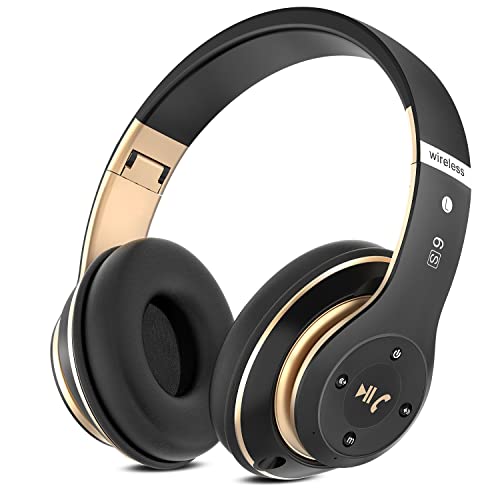
Other wireless headphones use RF connections, which transmit information through a radio frequency. over ear headphones noise cancelling wireless are usually more expensive than Bluetooth but they do provide superior sound quality and extend distances. The only drawback is that you'll need to remain within a certain distance from the transmitter in order to ensure a stable connection.
The top ANC headphones will offer the highest quality of isolation from sound for long periods of use. This allows you to concentrate on work in a noisy office or to sleep comfortably while travelling by train or plane. Noise-canceling headsets are also a good choice for home use. You can listen to music or audiobooks while your family watch TV or plays games.
Battery life
One of the major benefits of wireless headphones is that they are able to last for a few days or even weeks on one charge. This is an incredible benefit, especially if your listening habits are extremely active. It's a nightmare to have a battery run out during the course of your workday and have no way to power up your headphones. The only drawback to this feature is that they use up battery faster than wired headsets.
There are a variety of factors that affect the battery life of your headphones, including their size and noise cancellation features. The bigger the headset, the more powerful its battery will be, and the longer it will last on charge. However the design of the headset can also play a role. Many Bluetooth headsets are designed to be as lightweight and compact as is possible that's why they're likely to have an enlarge battery.
The quality of the battery may affect its lifespan as well. Lithium-ion and lithium-polymer batteries have much longer lifespans than Nickel-Cadmium (NiCad) ones since they aren't afflicted from the memory effect and are able to handle higher temperatures. However they do have a maximum number of charge cycles that are fully charged, after which their performance will start to decrease.
How long you leave your headphones plugged in will also affect the battery's life. Wireless headphones that are in standby mode use only a small amount of power, but some still consume some power even when they're not in use.
Also, be aware that the battery life advertised of your wireless headphones is according to the volume. You can anticipate your headphones to last the advertised time at lower volume levels however, this decreases dramatically when you crank up the volume.
It's also important to remember that if your wireless headphones have cases, this could affect their battery life. The case can keep the battery cool and help it last longer. The good thing is that you can purchase cases for most wireless headphones This shouldn't be an issue.
Ease of use
Whether you're on the go or just relaxing at home, a good pair of wireless headphones can improve your listening experience. You can tune out the background noise and focus on your music, podcasts or any other audio without worrying about knotted cables. There are a variety of models, including headphones for activities like running, and those that are comfortable to wear all day long. There are also models which offer ANC, noise cancelling and high-resolution audio.
The most reliable wireless headphones connect to your device via Bluetooth technology. While older versions of the technology can cause issues however, recent updates have reduced these problems. The majority of Bluetooth headsets have a small receiver that sits in the pocket or around the back of your neck, and the transmitter is connected to your audio source via an audio cable. The receiver and transmitter have distinct addresses and names, which allows you to pair them up.
Wireless headphones typically have a control onboard, which means you can alter the volume or other settings as you use them. There are models that come with touch-sensitive controls, which can be useful while you're on your phone. Moreover, many headphones are compatible with your device's voice assistant, so you can use them hands-free.
Apple removed the headphone connector from its iPhones and some users were worried about using headphones. Apple offers a broad selection of wireless headphones that don't require a headphone jack. They are simple to set-up and are suitable for use in activities like exercise or cleaning.
The Sony WH1000XM5 headphones offer the most wireless headphones for most people. They are comfortable to wear great sound quality and a long battery life. They are compatible with Bluetooth 5.0, which can stream high-quality audio. The XM5s application allows you to customize your audio experience. The XM5s feature an extremely bass-heavy profile, this can make mixes sound noisy or instruments sound cluttered. They also include a zippered hardshell case, which is ideal for storing them in your bag or briefcase.